Give Me All Your Forms of Vibration
Where we learn that all that purring is a sine (wave).
When you say the word vibration out loud - whether it’s one of many words in a sentence or it’s simply uttered all on its own with no context whatsoever - it begs a smile. Or, for the more reserved, it might just be a smirk of a smile.
You can call it a smile, a smirk, or a lopsided grin - it's a word that is bound to elicit a positive reaction.
In math, when something vibrates that means it’s moving back and forth between two points. It’s an oscillation, it’s a quiver, it’s a whole lotta stuff going on all at once.
A vibration has a potpourri of components.
There’s a movement that has direction, a direction which might involve some stretching, and there’s likely to be some sort of displacement occurring as well. There’s a (repetitive) periodic passing of time, tension may be released, a release of energy that has a measurable density to it. And all of this is occurring within common aka standard aka acceptable boundaries.
Sounds like the attributes of most relationships that I know.
I’ve touched upon the subject of vibrations before because that’s gonna happen if you write about Dutch mathematician Christiaan Huygens and pendulums and/or synchronization. Way back in the 1600s, he realized that when his two pendulum clocks were hanging near each other on the same wall, they not only kept time but they stayed in-sync with each other. When he moved them far away from each other, they lost sync. The short answer to the why question is that when they were no longer connected by each other's vibrations, they developed their own rhythm of being.
How very human of those clocks.
Huygens’ IRL experiment makes sense. If you throw a stone into a body of water, the ripples in the water - basically, the visual version of liquid vibrations - emanate outward in a circular formation, the stone having defined the centerpoint of action. The farther out we go from the center, the dissipation increases. Less ripples, in both amount and in the time that passes in-between each ripple, each vibration.
Same goes for sound vibrations. Strum the strings on a guitar, the sound dissipates over time and in (noise) volume. The frequency of those vibrations have a limit. That period of time from start to finish is what is known as the amplitude.
Now, I’m not about to show you the actual equation for a vibrating string because that’s all it would be: a show (a dull one, at that).* I don’t have the knowledge nor the vocabulary to explain what you would be looking at. But, I do find it quite interesting that in my Encyclopedic Dictionary of Mathematics (Volume II), I learned that that same equation is also called “the equation of a vibrating membrane, or the equation of sound propagation.”
Mathematically, that then means that the same set of operations are happening - that there's some sort of repetitive directional movement over a period of time that releases energy that directly causes a displacement in order to make room for itself - no matter what it is that’s vibrating.
Apparently, ruminating with your buddies about vibrations was a hot topic of conversation for 17th century mathy folks (across Europe it was, at least). Besides Huygens and his pendulum clocks, mathematicians René Descartes and Marin Mersenne and philosopher/scientist Isaac Beeckman strode even farther in their discussions, dipping their mathematically-based hypothesizing about vibrations into whole other disciplines, everything from music to cosmology.
This is a fact that will never fail to amaze me: it’s one thing, in the 20th or 21st century, to be sitting around with your friends when you’re a 20-something being, having late night convos about the music you love or the expanse of the universe. But can you just imagine what those conversations were like 300+ years ago?*
There were a series of letters that Descartes wrote to Mersenne - and in one letter, dated 1629:
At this point, Descartes wrote in the margin that “I abuse here the word ‘vibration’ that I take for each of the blows or little shakes that move the body that vibrates.” His marginal note shows his hesitation about how exactly to describe the state of the vibrating air, as opposed to the vibrating body that caused the sound or the vibrating ear receiving it.*
"Music and the Making of Modern Science" by Peter Pesic (pg. 97)
Oh boy oh boy, I loved reading that. Descartes was keen to delineate the start of a vibration (when two things bang into each other) from the ending moments of a vibration (when the ripples have reached as far as they will reach) from the middle part of it all (when the energy not only pushed around and made a path from its start to its end in the air, but it actually used the air to carry that energy from start to end).
Reading Descartes’ side-quip brought my focus to that middle portion of a vibration’s lifespan, too. Yeah, what’s going on with all that displacement of energy in the air? And to bring this back around to the human stylings of energy vibrations, what’s being displaced (who’s being displaced?) in order for there to be a modicum of room for the vibration to go from start to end?
Displacement (in math)
The difference between the initial position of something (such as a body or geometric figure) and any later position.
Merriam-Webster
Displacement (in psychology)
The redirection of an emotion or impulse from its original object (such as an idea or person) to another.
Merriam-Webster
Of all the activities that make up this thing called a vibration, I find displacement to be one of the most interesting because it’s one of those things in any on-going relationship that is not always recognized for the power it possesses. When something - or someone - is displaced due to a new vibration that has arrived into a space known as a relationship, it isn’t that that something/someone is gone and no longer there. It doesn’t disappear, never to be seen or heard from again. It’s just been moved to somewhere else. It still exists, but it’s been put somewhere else, somewhere... out-of-the-way.
We’ve all got that person in our lives who we naturally vibe with, so hard. It’s not just that you get each other, but there’s a palpable energy when the two of you are in close physical proximity; y'all are basically two clocks on the same wall. I’m curious what starts that particular type of vibration. It could be energy that you’re consciously emitting like some invisible game of laser-tag, or… maybe it’s energy that’s already percolating within you.
Like a kitty when it’s purring.
A combination of a cat’s voicebox, the muscles around it, and some brainwave signals will set that vibration into motion, though that vibration doesn’t only happen when a cat is pleased. Cats may also purr when they want to self-soothe themself, if they are hurt or scared. (Incidentally, did you know that in the Felidae family - which covers domestic house cats to lions & tigers [no bears but, still, oh my!] - not all the cats are capable of purring? The largest purr'r is the cheetah and I'd like to introduce you to Willow.)
Anyway, the same goes for me. When I’m waaaay excited or when I’m waaaaay concerned about something, I vibrate too – except I don’t purr, I flap. My hands. I’ve been doing this since I was a little kid, and though I very consciously worked to stop myself from doing this lest I be pointed at and made fun of, as I’ve gotten older – and particularly when I’m around people I trust and am comfortable with - I’ve been known to flap.
So I imagine that we all have some level of energy a’percolating - a vibration within - especially when our emotions and their associated brainwaves are bouncing signals inside our bodies. Some of us can contain it - and some of us gotta let it out and expend it into the universe before the top of our head 🤯 pops off. Some others might receive that vibe when it's directed at them and some other others might detect that vibration that's just existing, at a low thrum, no matter what initially generated it.
The fundamental fact about the behavior of air which is of importance in this connection is that air pressure seeks to become uniform everywhere. This means that if the air pressure for any reason should become high in one place, the air will spread out from that place into neighboring regions where the pressure is lower and so try to equalize the pressure in the entire region under consideration.
"Mathematics for the Nonmathematician" by Morris Kline (pg. 438)
Which brings me back to wondering what gets displaced by those sorts of vibrations – the internal emotional one and the external so-called electrical one - and if that displacement is able to assemble once again on its own, or at least get back on track and resume it's original position in all the things.
One of the most basic of vibrations is that of a tuning fork. What happens when one of those prongs gets plucked, when one of those tines gets tapped?
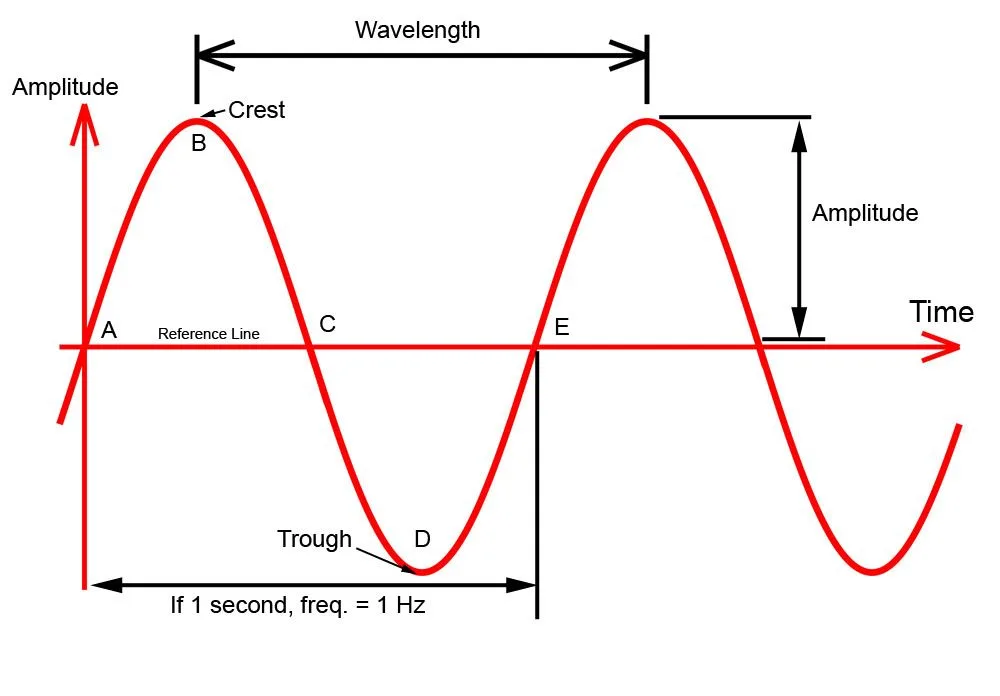
image via BillaVista.com
I am not surprised to learn that this all goes to sine curves and wave formations; as I am typing this my face is making one of those "of course!" expressions, because all things seem to go back to one of my personal mantras, Equilibrium. That's all that we want. The air pressure that has been displaced and is temporarily serving as a conduit for a vibration's passage, it just wants equilibrium. It's all that a cat (or me, myself and I) want when our vibrations are a'fluttering.
...sine waves come up wherever cyclic phenomena occur, from the cycle of the seasons to the vibrations of a tuning fork to the sixty-cycle hum of fluorescent lights and power lines. That annoying hum is the sound of sine waves bobbing up and down sixty times a second.
"Infinite Powers: How Calculus Reveals the Secrets of the Universe" by Steven Strogatz (pg. 109)
Anyhoozahl - I suppose I'm saying that vibrations tend to be great and positive, and I suppose I'm asking that we all pay attention to what got displaced in order for that vibrational force to rise on up. Most of the time, it resets on its own, no bigs; the air, the atmosphere, the equilibrium of a room. If the vibration sustains or it occurs with such frequency that there isn't the space to reset what was forcibly displaced, why dontcha take a moment or two to pay attention to that.
Thanks math, you're the best.
Share this essay